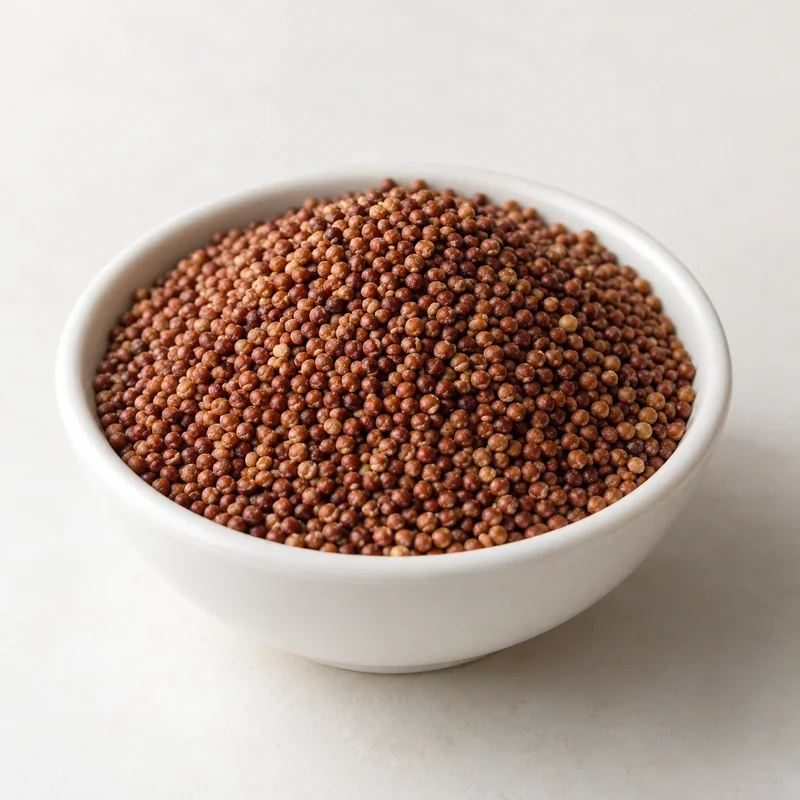
When can babies have finger millet?
Once your baby is developmentally ready for solids, usually around 6 months. Match the texture to their ability to sit upright, bring food to the mouth and swallow; age alone does not decide the right serving form.
Readiness matters: your baby should be able to stay seated with steady head control, coordinate bringing food to their mouth and swallow food. For premature babies or feeding concerns, ask your health professional.
How to serve finger millet
Follow your child’s feeding skills. These stages are starting points, not a guarantee that a particular texture is right for your baby.
Starting solids
Exploring smooth and mashed textures
Cook finger millet with water into a smooth porridge, then make it thicker over the following weeks.
Building skills
Managing soft lumps and finger foods
Serve thicker, lumpier finger millet porridge, or press soft cooked finger millet into small patties.
More confident eaters
Practising with adapted family food
Serve finger millet as a side or porridge with family meals.
Choking & food safety
- Cook grain or flour thoroughly to a soft texture.
- Cook thoroughly and keep the finished texture soft and moist. Check packaged products and every added ingredient.
Keep your baby seated upright and supervise every bite. No preparation removes all choking risk. Read the NHS food preparation guide.
What does finger millet bring to a meal?
Finger millet is a starchy grain that supplies energy and fiber; its composition differs from other millet species. Flour, processing and the actual product influence calcium and iron amounts, so this guide does not assign a nutrient-rich threshold.
Allergy notes
This plain ingredient is outside the common allergen groups highlighted here, but allergy is still possible. Recipes and packaged versions may add common allergens. Check ingredients and seek advice after a suspected reaction rather than using a missing tag as an allergen-free promise.
If your child has a known food allergy, severe eczema or a previous reaction, get individual advice before introducing the relevant food. Trouble breathing, swelling of the tongue or throat, or collapse can signal an emergency: call your local emergency number.
Common questions about finger millet
Is ragi porridge automatically iron-fortified?
No. A traditional grain or flour is not the same as a labeled iron-fortified infant cereal. Check the product rather than assuming processing adds iron.
How do I keep ragi porridge manageable?
Cook the flour thoroughly, whisk out lumps and keep the finished porridge moist and spoonable. Add familiar foods separately and check their allergens.
Sources & scope
Written by Highchair Chef using the sources below. General guidance informs these practical suggestions; it does not validate every food, cut or feeding stage. This page has not received individual clinical sign-off.
- Starting solid foods from around 6 monthsNHS
Developmental readiness, first foods, food groups and texture progression. General guidance; it does not validate each individual ingredient, cut or portion.
- Preparing food safelyNHS
Modify round/hard/sticky foods; remove pits/bones; cheese, breads, nuts and dried-fruit precautions. General hazard guidance; exact month/shape combinations are applications, not validated clinical thresholds.
- FoodData CentralUS Department of Agriculture
Public food-composition reference underlying the existing qualitative food summaries. The website does not present quantitative nutrient values, iron-rich thresholds or an analysis of an infant portion; food, variety, processing and brand can change composition.
Educational information, not an individual feeding plan. Food composition, products and guidance vary by country. Read our editorial approach.