When can babies have bottle gourd?
Once your baby is developmentally ready for solids, usually around 6 months. Match the texture to their ability to sit upright, bring food to the mouth and swallow; age alone does not decide the right serving form.
Readiness matters: your baby should be able to stay seated with steady head control, coordinate bringing food to their mouth and swallow food. For premature babies or feeding concerns, ask your health professional.
How to serve bottle gourd
Follow your child’s feeding skills. These stages are starting points, not a guarantee that a particular texture is right for your baby.
Starting solids
Exploring smooth and mashed textures
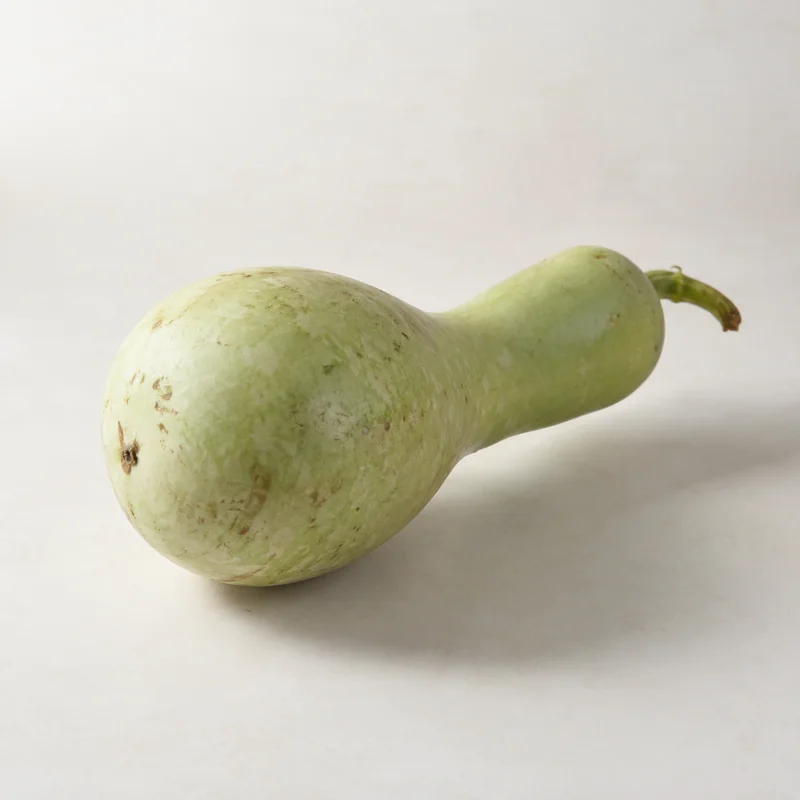
Peel, remove seeds, and cook bottle gourd until translucent and very soft. Mash it, or offer soft slices.
Building skills
Managing soft lumps and finger foods
Serve soft cubes of cooked bottle gourd in soups or with rice.
More confident eaters
Practising with adapted family food
Serve bottle gourd from family soups or stir-fries, cut small.
Choking & food safety
- Use a clearly identified edible bottle gourd from a reliable supplier.
- Discard unexpectedly bitter gourd and do not use its juice. Cooking is not a reliable remedy for a bitter product.
- Peel, remove seeds and cook the flesh until soft enough to mash.
Keep your baby seated upright and supervise every bite. No preparation removes all choking risk. Read the NHS food preparation guide.
What does bottle gourd bring to a meal?
Bottle gourd adds a mild, soft vegetable to dal or khichdi. Because the flesh is watery, combine it with a protein food and a suitable starch rather than relying on a thin gourd soup as a complete meal.
Allergy notes
This plain ingredient is outside the common allergen groups highlighted here, but allergy is still possible. Recipes and packaged versions may add common allergens. Check ingredients and seek advice after a suspected reaction rather than using a missing tag as an allergen-free promise.
If your child has a known food allergy, severe eczema or a previous reaction, get individual advice before introducing the relevant food. Trouble breathing, swelling of the tongue or throat, or collapse can signal an emergency: call your local emergency number.
Common questions about bottle gourd
What should I do if bottle gourd tastes bitter?
Discard it and do not serve it or its juice. Unexpected bitterness can signal natural toxins, and cooking is not a reliable way to make a bitter gourd suitable.
How do I prepare edible bottle gourd?
Buy a clearly identified food from a reliable supplier, peel and remove seeds, then cook until very soft. Mash into a moist dish for early feeding.
Sources & scope
Written by Highchair Chef using the sources below. General guidance informs these practical suggestions; it does not validate every food, cut or feeding stage. This page has not received individual clinical sign-off.
- Starting solid foods from around 6 monthsNHS
Developmental readiness, first foods, food groups and texture progression. General guidance; it does not validate each individual ingredient, cut or portion.
- Preparing food safelyNHS
Modify round/hard/sticky foods; remove pits/bones; cheese, breads, nuts and dried-fruit precautions. General hazard guidance; exact month/shape combinations are applications, not validated clinical thresholds.
- FoodData CentralUS Department of Agriculture
Public food-composition reference underlying the existing qualitative food summaries. The website does not present quantitative nutrient values, iron-rich thresholds or an analysis of an infant portion; food, variety, processing and brand can change composition.
- Bitterness in Angled Loofah and Other Cucurbit Fruits and VegetablesHK Centre for Food Safety
Unexpected bitterness and cucurbitacin illness in loofah/cucurbits. Official indexed page and bulletin text only; does not establish infant portions.
- Assessment of effects on health due to consumption of bitter bottle gourd juiceIndian Council of Medical Research expert committee / Indian Journal of Medical Research
Bitter bottle-gourd juice poisoning investigation and avoiding bitter products. Adult poisoning data do not validate an infant dose or make cooking a reliable remedy.
- WHO guideline for complementary feeding of infants and young children 6–23 months of age (2023)World Health Organization
General starting-age and dietary-diversity framework, food-group nutrients and vitamin C with plant iron. Original guideline PDF pages 36 and 40–41 were read. Does not validate each recipe, serving cut, food-specific nutrient amount or infant portion.
Educational information, not an individual feeding plan. Food composition, products and guidance vary by country. Read our editorial approach.